



Qu'est-ce que le bois de construction ? Guide des dimensions du bois
Comprendre les dimensions nominales et les dimensions réelles de votre bois
Le bois de charpente est un élément essentiel de nombreux projets de construction, qu'il s'agisse de terrasses, de patios ou de projets de construction résidentielle.
Matériau indispensable aux constructeurs, le bois de charpente fournit les éléments standardisés et polyvalents nécessaires à une construction efficace et précise. Le bois de charpente est généralement fabriqué à partir de résineux tels que le pin, le sapin et l'épicéa, qui sont plus faciles à travailler et plus abordables que les feuillus.
Mais il y a beaucoup à savoir sur le bois de charpente, et certains aspects ne sont pas aussi simples qu’ils le paraissent, comme la différence entre les dimensions nominales et les dimensions réelles. La construction des bâtiments serait aujourd’hui bien plus difficile sans des matériaux normalisés tels que le bois de charpente. Il est essentiel que les constructeurs maîtrisent les dimensions standard pour garantir une construction efficace et précise.
Voyons donc quelles sont les dimensions courantes du bois de charpente, comment les interpréter et comment elles sont utilisées.
Qu'est-ce que le bois de construction ?
Le bois de construction est du bois qui a été scié ou raboté à des largeurs et des épaisseurs normalisées, exprimées en pouces, et qui est principalement utilisé dans le secteur du bâtiment. Cette opération peut être réalisée à l'échelle industrielle dans une scierie de production de masse ou à domicile à l'aide d'une scie portable.
Ces dimensions de bois de charpente sont souvent utilisées dans des projets de construction tels que la construction de maisons ou d'autres projets de construction traditionnelle, ainsi que pour la pose de clôtures, de bardages et d'autres projets de bricolage ou commerciaux. Le bois de charpente est un bois qui a été coupé et scié selon des dimensions standardisées, puis raboté sur les quatre côtés afin d'obtenir des dimensions lisses et uniformes, pour une utilisation dans diverses applications. 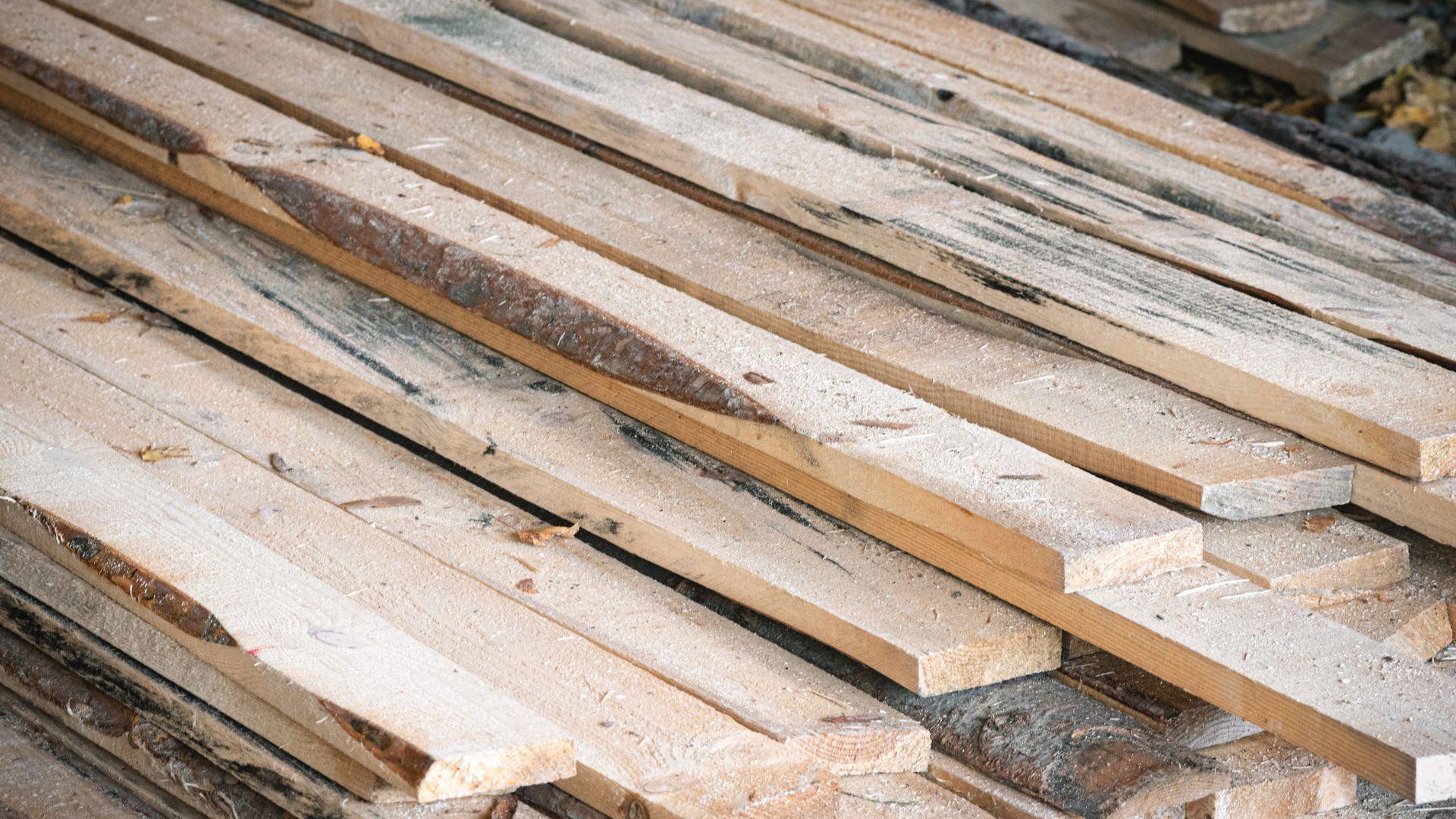
Quelles essences de bois sont utilisées pour fabriquer le bois de charpente ?
Le bois de construction peut être fabriqué à partir de n'importe quelle essence de bois, mais il est le plus souvent issu de pin, d'épicéa, de sapin de Douglas, de cèdre, de chêne, d'érable, de peuplier et d'autres essences courantes.
-
- Le pin est un bois très apprécié en raison de sa légèreté et de sa résistance au rétrécissement et au gonflement.
- L'épicéa est couramment utilisé dans le domaine de la construction, notamment pour les montants muraux et les charpentes, bien qu'il soit moins résistant à la pourriture.
- Le sapin de Douglas est réputé pour sa résistance et sa durabilité, ce qui en fait un matériau idéal pour les applications structurelles.
- Le cèdre est naturellement résistant à la pourriture et aux insectes, ce qui en fait un matériau idéal pour les applications en extérieur, telles que les terrasses et les clôtures.
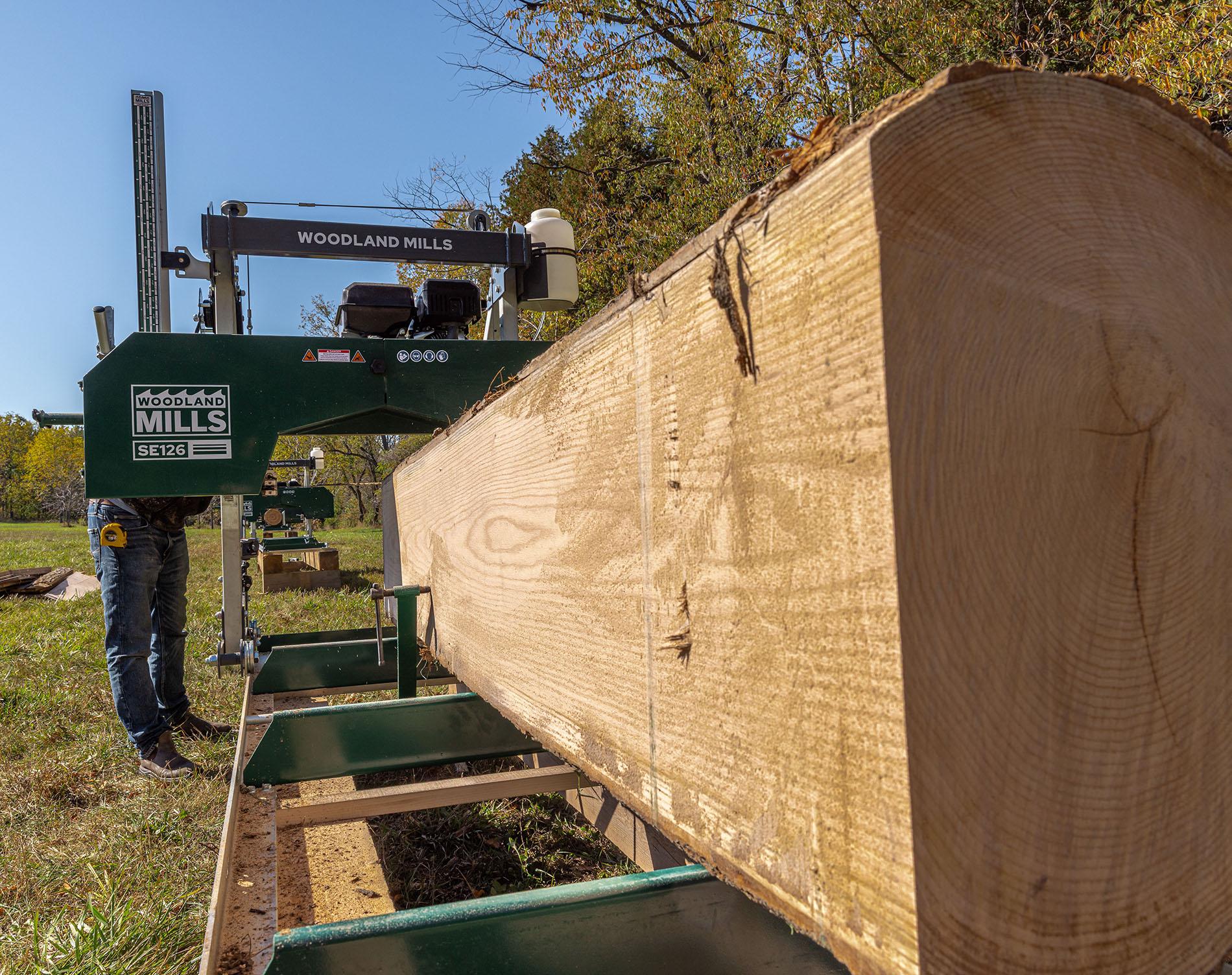
Le bois de construction massif, comme le chêne, l'érable et le peuplier, est couramment utilisé pour la fabrication de meubles haut de gamme et les projets d'aménagement intérieur raffinés. Le chêne, solide et durable, est souvent utilisé pour les parquets, les armoires et les meubles. L'érable est apprécié pour sa texture lisse et sa couleur claire, ce qui en fait un choix populaire pour les armoires et les meubles raffinés. Le peuplier est un bois dur abordable, connu pour sa texture lisse et sa facilité de peinture, ce qui le rend idéal pour la fabrication de meubles et d'armoires.
Quelle est la différence entre les dimensions nominales et les dimensions réelles ?
Les dimensions nominales sont un terme utilisé pour décrire les dimensions approximatives d'une pièce de bois, sans tenir compte des pertes de matière dues à la largeur de coupe de la lame de scie ou au rabotage. Les dimensions réelles diffèrent, car elles prennent en compte ces processus et la quantité de matière perdue.
Par exemple :
-
-
Une planche standard de 2 pouces sur 4 pouces utilise ces dimensions précises comme dimensions nominales
-
Les dimensions réelles d'une planche de 2 x 4 sont de 3,8 cm x 8,9 cm
-
Vous trouverez ce type de bois dans les quincailleries ou chez les négociants en bois. À la maison, vous pouvez scier votre bois de manière à obtenir des dimensions finales de 5 cm x 10 cm ou de 3,8 cm x 8,9 cm.
Quelles sont les dimensions courantes du bois de charpente ?
Même s'il existe une grande variété de projets que vous pouvez réaliser, les dimensions courantes et les tailles standard du bois de charpente sont souvent utilisées, même par les scieurs qui scièrent leur propre bois. Les dimensions les plus courantes sont notamment le 2x4, le 2x6, le 4x4 et le 6x6, mais le terme « bois de charpente » peut également désigner toute une gamme d'autres dimensions standard.
Voici quelques dimensions courantes de bois de construction, exprimées en dimensions nominales et réelles.
| Diamètre nominal | Dimensions réelles (en pouces) |
|---|---|
| 1x2 | 3/4 x 1 1/2 |
| 1x4 | 3/4 x 3 1/2 |
| 1x6 | 3/4 x 5 1/2 |
| 1x8 | 3/4 x 7 1/4 |
| 2x2 | 1 1/2 x 1 1/2 |
| 2x3 | 1,5 x 2,5 |
| 2x4 | 1,5 x 3,5 |
| 2 × 6 | 1,5 x 5,5 |
| 2 × 8 | 1 1/2 x 7 1/4 |
| 2 × 10 | 1 1/2 x 9 1/4 |
| 2x12 | 1 1/2 x 11 1/4 |
| 4x4 | 14 x 14 cm |
| 4 x 6 | 14 x 14 cm |
| 6x6 | 14 x 14 cm |
Si je scie moi-même mon bois, dois-je le scier aux dimensions réelles ?
Une scierie portable équipée d'une lame à trait de scie fin permet de scier du bois avec un minimum de perte de matière. Dans cette optique, les scieurs amateurs devraient-ils scier aux dimensions réelles ou aux dimensions nominales ?
Tout est une question de préférence. Si vous construisez vos propres structures, il peut être plus simple d'élaborer un plan en utilisant des dimensions nominales, car il est souvent plus facile de concevoir des plans à partir de chiffres ronds, comme 2x4 ou 4x4.
Mais si vous utilisez à la fois du bois scié maison et du bois acheté en magasin, il sera peut-être plus simple de le scier aux dimensions réelles pour que tout s'emboîte parfaitement.
Comment découper du bois de construction aux dimensions courantes ?
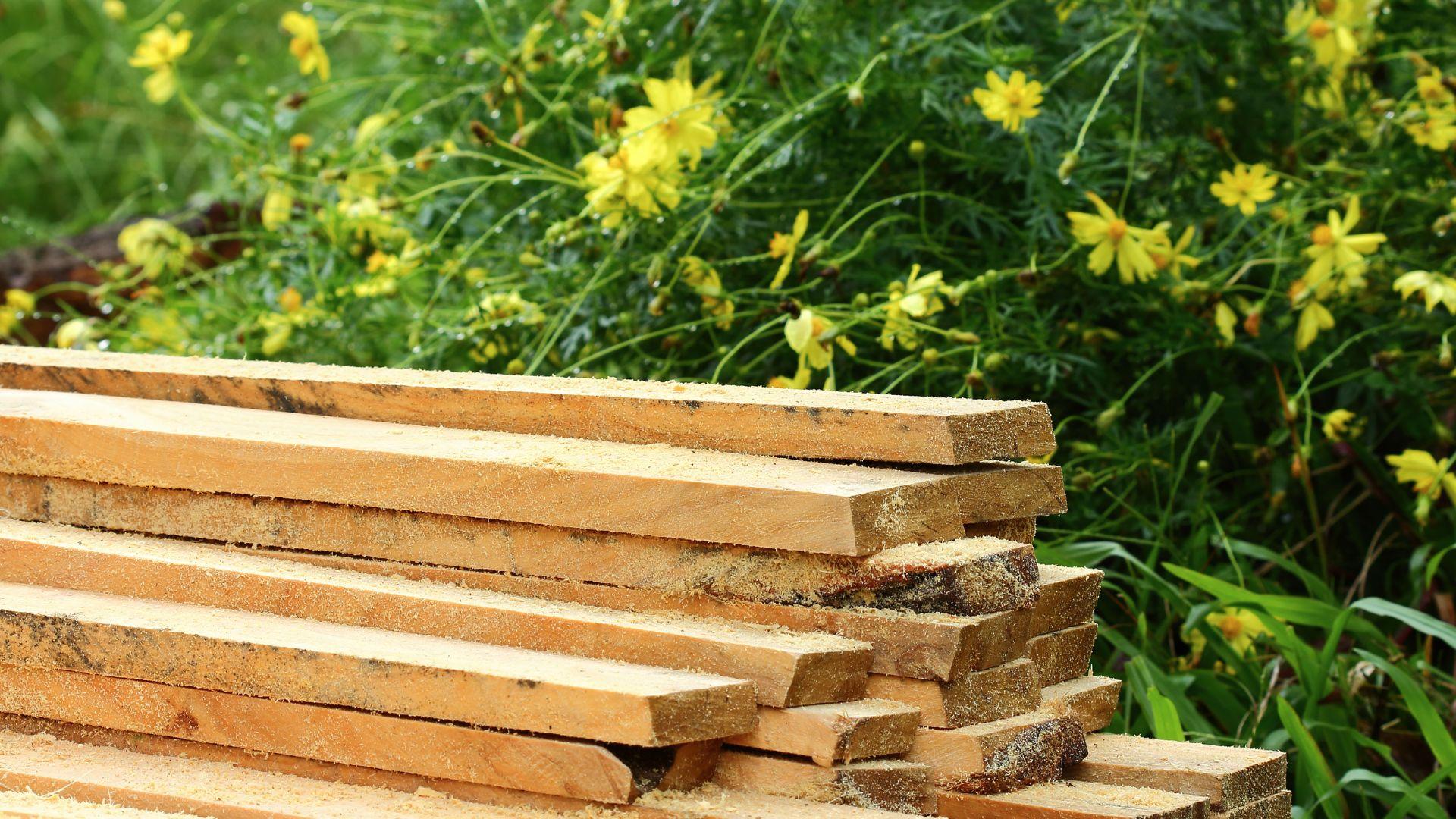
Avec une lame de scie à ruban à trait de coupe fin sur une scierie portable, vous n'enlèverez pas assez de matière pour transformer une planche de 2 x 4 en une planche de 3,8 cm x 8,9 cm. Autrefois, les scieries industrielles jouaient un rôle crucial dans la production de planches coupées à des dimensions standardisées, contribuant ainsi à garantir l'uniformité nécessaire à la construction et à la menuiserie.
Si vous le souhaitez, vous pouvez scier vos grumes directement sur la scierie pour obtenir des dimensions proches de ces mesures réelles courantes. Sur une scierie portable Woodland Mills, l'échelle de mesure des grumes tient compte des pertes dues à la largeur de coupe, ce qui vous permet de scier aux dimensions exactes que vous souhaitez.
Vous pouvez également raboter une planche pour enlever entre 1,5 mm et 6 mm en effectuant plusieurs passes.
Si vous fabriquez des meubles ou réalisez des projets d'extérieur où il est essentiel de respecter des dimensions précises pour obtenir des assemblages parfaits et sans jeu, vérifiez soigneusement vos découpes au fur et à mesure du fraisage. Vous pouvez toujours enlever davantage de matière après le fraisage, mais vous ne pourrez jamais rajouter la matière perdue à la planche.
Conseils pour le sciage de bois de construction aux dimensions nominales
Vous souhaitez scier à des dimensions nominales dans votre scierie ? Voici quelques conseils utiles :
-
-
Faites des essais et commencez par utiliser du bois de qualité inférieure
-
Vérifiez l'ajustement de vos planches et de votre bois après la découpe afin de garantir la solidité et l'intégrité structurelle de votre produit fini
-
Le rabotage et le ponçage destinés à obtenir du bois de finition permettent d'éliminer l'excédent de matière afin d'obtenir les dimensions finales souhaitées
-
Les travaux de charpente exigent davantage de précision, surtout si vous utilisez du bois scié plutôt que du bois acheté en magasin de bricolage
-
Mesurez avec soin et utilisez l'échelle magnétique de votre scierie pour affiner vos coupes avec précision
-
BOUTIQUE SAWMILLS
HM122
Une scierie d'entrée de gamme dotée de caractéristiques impressionnantes à un prix abordable. Conçue pour les scieurs amateurs ou les menuisiers à la recherche d'une solution économique pour scier du bois.
HM126MAX
La scierie portable originale de Woodland Mills. Reconnue depuis des années par les amateurs, elle est désormais équipée d'une tête de sciage FULLCUT™ permettant d'optimiser la largeur de coupe utile.
HM130MAX
Une scierie de grande capacité qui produit de superbes planches à bords vifs de grande valeur. Dotée de nombreuses caractéristiques, notamment notre tête de scie FULLCUT™, le système de lame RapidChange®, la lubrification automatique, et bien plus encore.
HM136MAX™
La solution ultime pour couper de larges dalles à bords vifs, parfaites pour les dessus de table, les comptoirs, les bancs et bien plus encore. La conception unique de notre tête de scie FULLCUT™ garantit que les atouts les plus larges de vos grumes restent intacts.
Rejoignez le groupe Facebook de la communauté de Woodland Mills. Recherchez des conseils et des idées auprès de plus de 65 000 membres compétents et solidaires.
- Considérations préalables à l'achat
- Aide à l'installation de la scierie
- Photos et vidéos d'inspiration du projet
- Aide communautaire au dépannage